
Hidden Moisture & Mold in Air Ducts: The Illnesses It Can Cause Without You Ever Seeing It

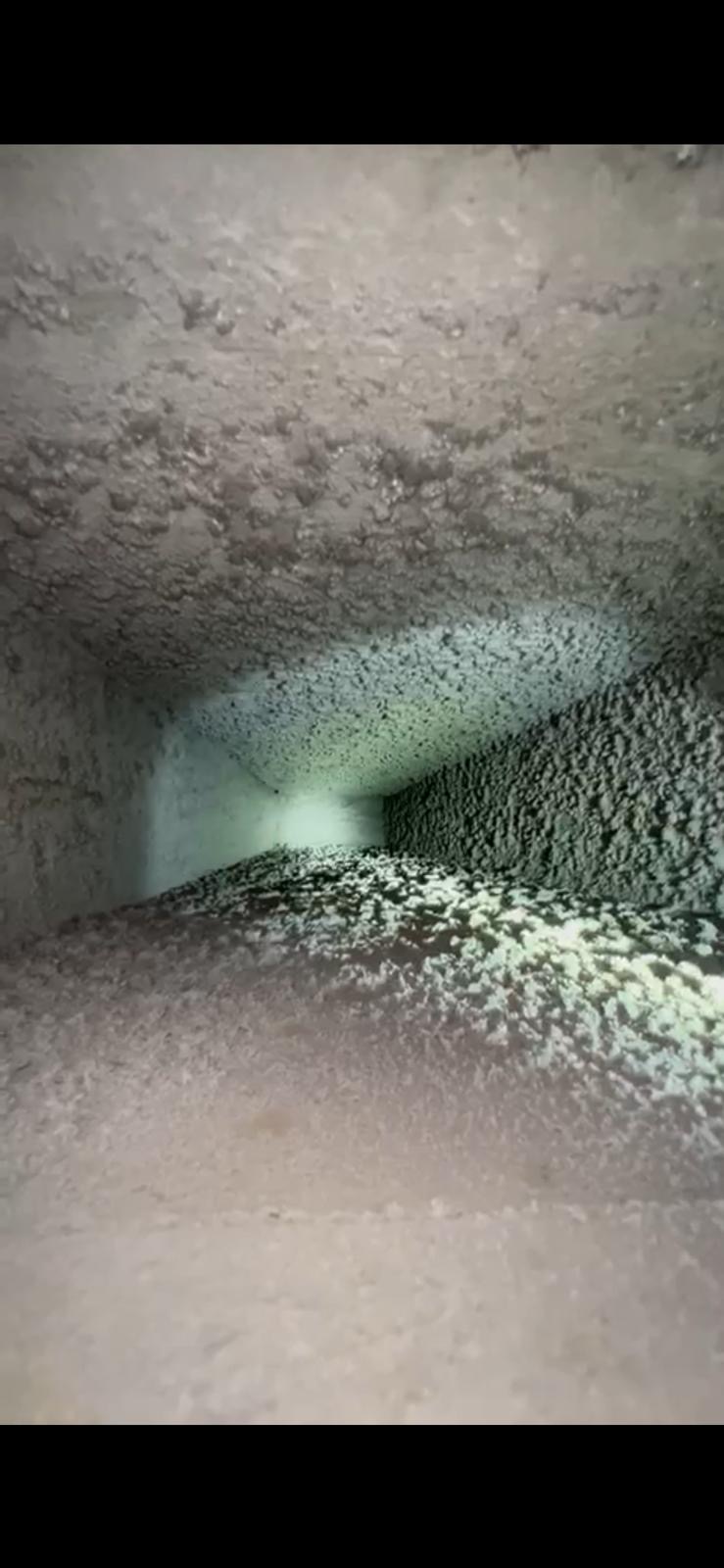
Quick answer — hidden mold health effects:
Mold doesn’t need to be visible to affect your health — trapped moisture, darkness and organic dust inside your ducts are enough for it to grow where no one can see it. Per the CDC and EPA, indoor mold exposure is linked to stuffy nose, coughing, wheezing, eye and skin irritation, more frequent asthma attacks, and — in cases documented in contaminated air-conditioning and duct systems — hypersensitivity pneumonitis. The CDC has not established any indoor mold exposure level it considers “safe” — removing the moisture and the mold at the source is the only real fix.
Most people picture mold as something you can see: a black stain in the corner of a bathroom, a water-stained ceiling after a leak. But the mold that worries indoor air quality specialists most is the kind nobody sees — the kind growing inside ductwork, behind an AC coil, or in a condensate pan, in total darkness, fed by the very moisture your own HVAC system produces every time it cools the air.
Why moisture — not heat or cold — is the real cause
Mold needs three things to grow: darkness, moisture, and an organic surface to feed on (dust, skin cells, fibers). Ductwork offers all three. The most common cause is condensation: when warm, humid indoor air meets the cold surfaces of a poorly insulated duct or an AC coil, water vapor condenses into droplets — the same way a glass of cold water sweats on a humid Virginia afternoon. A clogged condensate pan, a leaking coil, or a blocked drain line add direct water to the problem. In the humid DMV climate, especially through summer, that condensation can build for weeks before anyone notices the musty smell.
The illnesses and symptoms science links to hidden mold
The Centers for Disease Control and Prevention (CDC) and the Environmental Protection Agency (EPA) have documented the health effects of indoor mold for decades. Here’s what the evidence supports most strongly:
- Hay-fever-type allergic reactions — sneezing, nasal congestion, red or watery eyes, and skin rash (dermatitis). The EPA notes these reactions can be immediate or delayed.
- Respiratory symptoms in otherwise healthy people — the U.S. Institute of Medicine (IOM, 2004) found sufficient evidence linking indoor mold exposure to upper respiratory tract symptoms, coughing and wheezing, even in people with no prior conditions.
- More frequent or severe asthma attacks — in people with mold-allergic asthma, exposure can trigger or worsen episodes, according to the CDC.
- Hypersensitivity pneumonitis — a lung inflammation specifically documented in workers exposed to contaminated air-conditioners, ductwork and filters, per research cited by the CDC/NIOSH. It’s one of the few mold-related health effects tied directly to the HVAC system itself, not just the general indoor environment.
- Lung infections in vulnerable individuals — the CDC warns that immune-compromised people or those with chronic lung disease can develop actual lung infections from mold exposure, a different issue from a simple allergic reaction.
- Eczema and other skin conditions — CDC-cited research on damp buildings links indoor moisture to the worsening of this condition.
Who’s most at risk
The CDC is clear: there is no indoor mold exposure level considered “safe,” because individual responses vary too much. That said, some groups are more vulnerable: young children (the EPA notes that nearly 80% of asthma cases begin before age six), older adults, pregnant individuals, anyone who already has asthma or allergies, and people with a weakened immune system or chronic lung disease. If anyone in your household falls into one of these groups, hidden moisture in your ducts stops being a comfort issue and becomes a health issue.
Musty smell when the system turns on? See what’s really in there.
Book Free InspectionSigns of hidden moisture or mold in your ducts
- A musty, earthy or “basement” smell that shows up right when the HVAC system turns on — and disappears when it shuts off
- Allergy symptoms that only happen, or get worse, indoors — not outside
- Condensation or water stains near the air handler, the coil, or the drain line
- Coughing, congestion or eye irritation that noticeably improves after a few hours away from the house
- Black, gray or greenish dust blowing out of vent registers
Duct cleaning vs. mold remediation: not the same thing
Standard duct cleaning removes dust, lint and general contaminants — but if mold is already established inside the system, a different process is required. Mold remediation attacks the problem at its source: it identifies and corrects the moisture source, applies EPA-registered antimicrobial products where appropriate, and confirms with photos that the issue was actually resolved, not just covered up. Any technician who offers to “clean the mold” without first talking about where the moisture is coming from isn’t fixing the cause — they’re just delaying its return.
How to protect your family
- Schedule a camera inspection to see the actual inside of your ducts, not just what you can smell
- Keep indoor relative humidity ideally between 30% and 50%
- Regularly check and clean the AC condensate pan and drain line
- Seal duct leaks — humid air seeping in through poorly sealed joints is a constant source of condensation
- If you notice a musty smell or symptoms that only happen at home, don’t wait to see it — by the time mold is visible, it’s usually been growing hidden for a while
Schedule your free camera inspection — see the real inside of your ducts before hidden mold becomes a health problem. (571) 353-9467 · info@ezductclean.com